
Best Porn Blockers Of 2026

Updated: Feb 2026
The battle for purity online has never been more urgent — or better equipped. A staggering 1 in 5 mobile internet searches today involve explicit content, and with AI-generated pornography now flooding the web and VR adult content becoming mainstream, the old tools are no longer enough. The good news? The technology fighting back has never been stronger either.
Pornography doesn't show too much of the person — it shows far too little. It strips away the soul, the story, the inherent dignity of the human person made in the image and likeness of God. The Church has always taught that authentic love sees the whole person, not just the body. Blocking pornography isn't prudishness, it's a profound act of reverence for yourself and for others.
Millions of men and women are waking up to the damage porn has done in their lives. Communities like Reddit's r/NoFap (now boasting over 1 million members) report that pornography addiction has led to anxiety, depression, broken relationships, erectile dysfunction, and a crushing disconnection from God and from authentic human love. You are not alone in this fight, and you don't have to fight it with willpower alone.
Below are the best porn blockers available in 2026 — tested, updated, and compared so you can find the one that fits your life and your mission.
What is the Best Porn Blocker?
#1: Covenant Eyes

#1: Covenant Eyes — Best Overall for Accountability
Covenant Eyes has been the gold standard in accountability software since 2000, and in 2026 it remains the top recommendation for anyone serious about purity. What sets it apart from every other tool on this list isn't just blocking — it's the combination of blocking and human accountability that makes lasting freedom possible.
Their signature Screen Accountability feature uses AI to monitor everything across your screen, takes automatic screenshots, and flags anything suspicious for your chosen accountability partner to review. This goes far beyond URL filtering — it catches content on social media feeds, in search results, and in apps that would slip right through a basic blocker. It even works in incognito mode.
What's new in 2026: Covenant Eyes has expanded their Victory app, which lets accountability partners communicate directly within the platform, receive real-time alerts, and access mini-courses on recovery. They've also added a 21-day healing journey for women called Arise — a recognition that pornography addiction is not only a men's issue.
Platforms: Mac, Windows, Android, iOS (Screen Accountability works device-wide on Android; on iOS it currently works within Safari — a limitation they continue to work on)
Pros:
AI-powered Screen Accountability is the most robust on the market
Up to 10 users on one account — great for families or accountability groups
Faith-rooted company with deep resources: courses, podcasts, community
Lifetime plan available ($850 one-time) — a strong long-term investment
30-day money-back guarantee
Cons:
Screen Accountability on iOS is limited to Safari (not app-wide)
At $18/month, it's among the pricier options — though worth it
Can produce occasional false positives that require partner conversation
Price: $18/month | $184/year (~$15.33/month) | $850 lifetime
TRY 30 DAYS FREE WITH CODE “CARRYYOURCROSS”
#2: Canopy — Best AI Blocker for Individuals and Couples

Canopy has become one of the strongest challengers to Covenant Eyes since our last update, and it deserves serious consideration — especially for individuals and couples who want active AI blocking (not just accountability reporting) on every device.
Canopy uses real-time AI image recognition to detect and block explicit content before you see it — not just on known adult websites, but across social media, search results, and general web browsing. It's not working from a list of banned URLs; it's actually analyzing visual content in real time.
What's new in 2026: Canopy now offers deeper app-level blocking and improved bypass prevention. On Android, you cannot remove or disable it without your accountability partner's approval. On iPhone, removal triggers an immediate notification to your partner.
Platforms: iOS, Android, Mac, Windows, Chrome extension
Pros:
Real-time AI image recognition — catches content most blockers miss
Blocks apps, not just websites (Instagram, TikTok, etc.)
Uninstall protection with partner notification
Internet "Down Times" scheduling for extra protection at vulnerable hours
Competitively priced
Cons:
Less faith-specific culture and resources than Covenant Eyes
Fewer community features
Price: ~$10/month (individual) | ~$12/month (duo, includes your accountability partner)
#3: Truple — Best for Serious Screenshot Accountability
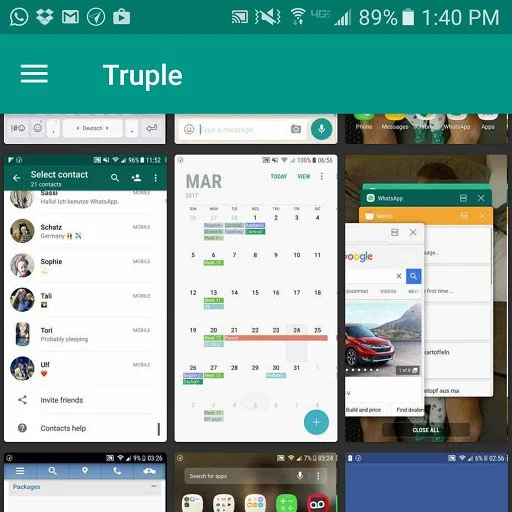
Truple has grown significantly in the accountability software space. Like Covenant Eyes, it uses AI to capture screenshots of suspected explicit content and immediately blocks access — but Truple's screenshot system is particularly fast and accurate, with strong cross-device support.
Truple is built around the conviction that accountability, not just blocking, is what creates lasting change. It partners you with someone you trust, automatically logs suspicious activity, and makes it impossible to hide.
Platforms: Windows, Mac, Android, iOS, Linux
Pros:
Fast, AI-powered screenshot accountability
Strong Linux support (rare among competitors)
Transparent logging — full activity visible to accountability partner
No VPN required — works at the OS level
Cons:
Interface is more technical; less polished than Covenant Eyes
Fewer pastoral/spiritual resources
Price: $16/month
#4: Ever Accountable — Best for Privacy-Conscious Users

Ever Accountable has quietly become one of the most respected accountability apps on the market, and it deserves a prominent place on this list. Where Covenant Eyes leads with AI-powered screen capture and a faith-rooted community, Ever Accountable leads with privacy, simplicity, and a compelling track record — 95% of users report an immediate drop in porn use after installing it.
The core mechanic is elegant: everything you view on your devices is made visible to a trusted accountability partner through a weekly report, with instant alerts if explicit content is detected. Knowing that a friend, spouse, or mentor can see your activity at any time is, for many people, more powerfully motivating than any filter. There's nowhere to hide — and that transparency is precisely what creates freedom.
What distinguishes Ever Accountable from competitors is its industry-leading approach to data security. It is the only accountability app to hold dual ISO certification (ISO 27001 and ISO 27701) for information security and privacy — independently audited. Your data is encrypted and protected at a level that simply isn't matched elsewhere in this space.
What's new in 2026: Ever Accountable's on-device AI now monitors popular social apps — not just browser activity — closing a significant gap that most accountability tools leave open. The app also operates without a VPN, making it lighter and less intrusive on device performance than VPN-based competitors.
Platforms: Android, iOS, Windows, Mac, Chromebook, Kindle
Pros:
95% of users see an immediate reduction in porn use
ISO-certified data security and privacy — the only app in this space with this credential
No VPN required — lightweight, fast, works in the background
Unlimited accountability partners on one subscription
All devices covered under one subscription price
14-day free trial + money-back guarantee if it doesn't improve things
Cons:
Focuses on accountability reporting rather than active AI blocking (pair with Canopy for full coverage)
Some iOS users report occasional login hiccups — customer support is responsive
Price: $14.99/month | $129/year
#5: Net Nanny — Best for Families with Young Children
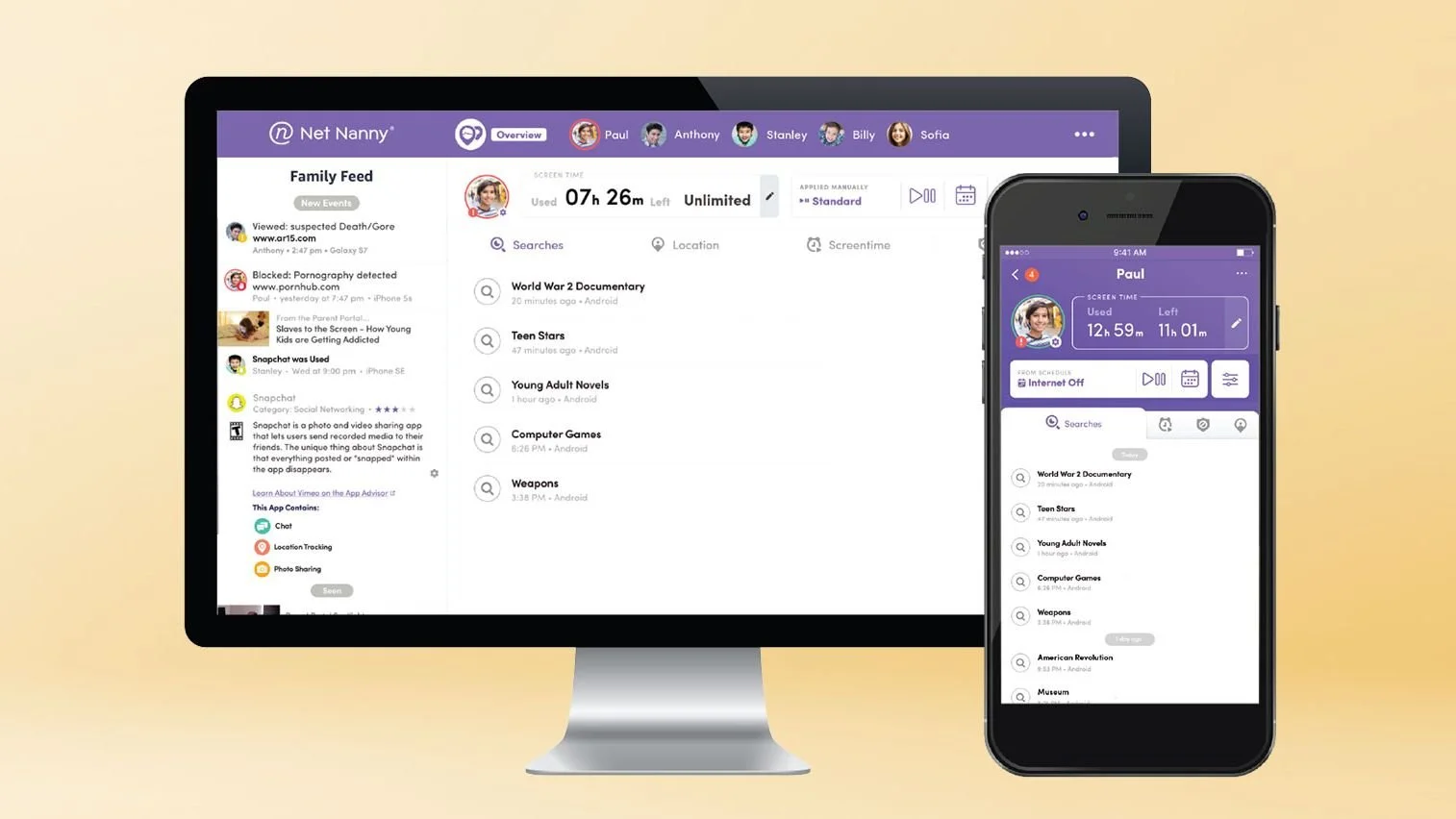
Net Nanny is one of the oldest names in content filtering — it has been around since 1995 — and in 2026 it remains the most recognized and feature-rich parental control suite available. If your primary concern is protecting children rather than adult accountability, Net Nanny is worth serious consideration.
What sets it apart from most tools on this list is its real-time, context-aware web filtering. Rather than working from a static list of banned websites, Net Nanny analyzes the content of web pages as they load — meaning it can catch explicit material that appears in unexpected places like comments sections, ads, or embedded content. It is also smart enough to distinguish context: a search for "breast cancer" won't be flagged the same way as a search for explicit content.
On top of content filtering, Net Nanny includes screen time scheduling, app blocking, YouTube video monitoring (it can show parents exactly which videos were watched), and GPS location tracking. The Family Protection Pass covering 20 devices is strong value for larger households.
Important caveat: One independent testing site reported being billed repeatedly after canceling their subscription, which is a meaningful red flag. Always cancel through Net Nanny directly and confirm in writing. For individual adults seeking accountability (rather than parental controls for children), tools like Covenant Eyes or Ever Accountable are better suited.
Platforms: Windows, Mac, iOS — note: no Android monitoring app as of early 2026
Pros:
Real-time, context-aware content filtering — among the best in the industry
YouTube video monitoring is uniquely thorough
Covers up to 20 devices on the family plan
Screen time scheduling and instant internet pause
Well-designed, easy-to-use dashboard
Cons:
No Android support for the monitoring app — a significant gap for many families
No free trial (14-day money-back guarantee only)
Billing complaints flagged by at least one major review outlet — cancel carefully
Primarily a parental control tool, not an adult accountability app
Price: $54.99/year (5 devices) | $89.99/year (20 devices)
#6: SHIFT — Best for Eliminating Phone Addiction at the Root
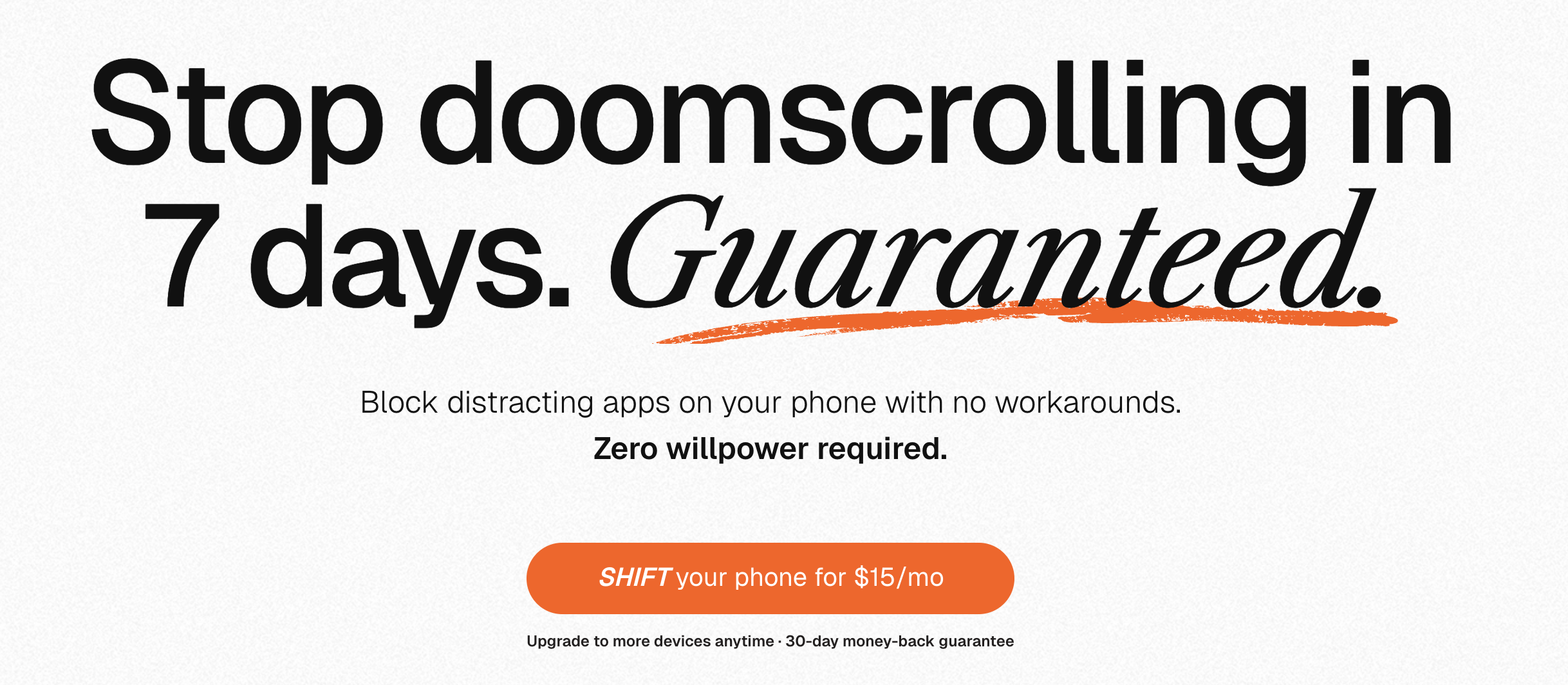
Most porn blockers ask: how do we block the bad content? SHIFT asks a different question: what if the phone itself was the problem? The result is one of the most talked-about digital discipline tools of 2025-2026, and it's worth a close look for anyone whose struggle lives primarily on their phone.
SHIFT works by connecting your phone to a desktop application, which then "shifts" your device into a restricted mode — disabling every app that isn't essential (social media, browsers, streaming, games) and leaving only the tools you genuinely need: calls, texts, maps, banking, camera, music, prayer apps, and similar utilities. Think of it as a software-powered transformation from a smartphone into a virtuous phone, without giving up the tools modern life requires.
What makes SHIFT unique is how hard it is to bypass. Unlike Apple's native Screen Time, which can be disabled from within your phone's settings, SHIFT is applied through the desktop app and cannot be removed from the phone itself. The "unshifting" process requires access to your computer — creating real, physical friction between you and your distractions. You can also set Focus Sessions of 30, 60, or 90 minutes that lock unshifting entirely for that period.
This is a different philosophy than most of the tools on this list: rather than monitoring what you watch and reporting it to a partner after the fact, SHIFT removes the pathway to temptation in the first place.
Platforms: iOS and Android
Pros:
Extremely difficult to bypass — requires desktop computer to unshift
Keeps all genuinely useful phone functions intact
Focus Sessions provide complete lockout for set periods
One-time purchase, no subscription required
Works on iPad as well
Cons:
Doesn't include accountability partner reporting (pair with Covenant Eyes for full coverage)
Requires a computer nearby to unshift — inconvenient if traveling
Does not work as a porn-content filter on its own; it blocks access to browsers/apps entirely
Android: blocked apps are disabled but still visible on screen
Price: $15/mo
Note: Best used in combination with an accountability tool like Covenant Eyes for comprehensive coverage — SHIFT removes access, Covenant Eyes provides transparency.
#7: Physical NFC Blockers — The New Frontier in Intentional Friction

One of the most fascinating and genuinely new trends in digital discipline is the rise of physical NFC (Near Field Communication) blockers — small hardware tags, roughly the size of a quarter, that your phone must tap or scan to unlock blocked apps. This might sound gimmicky, but the science and the user reviews suggest it works better than pure software solutions for many people.
Here's the core insight: willpower fails because bypassing a software blocker takes only a moment and leaves no trace. A physical tag changes the equation. You have to physically get up, find the tag, and consciously decide to unlock your apps. That small moment of pause — what behavioral scientists call a "distraction barrier" — is often enough to break the autopilot loop that leads to relapse.
Researchers describe this as Rational Override Theory: forcing a brief pause between impulse and action activates the prefrontal cortex and gives your better judgment a chance to intervene. Users of these tools consistently report saving over an hour of screen time per day compared to software-only blockers.
The main NFC blocking options in 2026:
Brick is the most polished and heavily reviewed physical NFC blocker on the market right now, reviewed by outlets like NBC Select and Consumer Reports. The small magnetic puck pairs with a free app — tap your phone to Brick to lock your chosen apps, and they stay locked until you physically tap it again to unblock. The key feature: if you leave the house without the puck, your apps stay bricked. No remote override, no "just five more minutes." It now supports both iOS and Android (Android support added September 2025), and one Brick device can link to multiple phones — great for couples or families. Brick also added automated scheduling in 2025, so you can set it to brick your phone every evening automatically. One important caveat: a Screen Time backdoor exists on iPhone that technically allows removal of the Brick restriction without the physical device. The company is aware and working on it — for maximum protection, pair with a partner who controls your Screen Time passcode. Price: $59 one-time, no subscription.
Unpluq is a popular physical tag blocker. The keychain-sized NFC tag pairs with the Unpluq app to lock any apps you choose. To unlock them, you need the physical tag — so if you leave the tag at home (or give it to your spouse), your apps stay locked when you're out. Users who use the physical tag recover significantly more screen time than those using the app alone. Unpluq also offers scheduling (block social media every evening automatically), multiple barrier types, and a family plan. Price: ~$26 for the tag + $4–$7/month subscription.
Foqos is the free, open-source alternative to all of the above. It supports physical blocking with both NFC tags and QR codes, and offers digital and physical blocking strategies at no cost. QR codes can be printed and hidden anywhere — give one to your accountability partner, tape one inside a closet, put one somewhere that requires deliberate effort to reach. Rated 4.9 stars with over 2,200 App Store reviews. Price: 100% free.
The important caveat: Physical NFC blockers are primarily friction tools, not content filters. They don't monitor what you do, don't report to accountability partners, and don't block content that arrives through other means (email, texts, etc.). They are best understood as a layer of defense against impulsive access — and they work best when combined with a full accountability tool like Covenant Eyes. But for someone whose biggest vulnerability is the phone in their pocket during vulnerable late-night hours, a physical tag hidden at the other end of the house can be a genuine game-changer.
2026 Trends: What's Changed in the Porn Blocker Landscape
AI Is Now the Standard, Not the Exception
The biggest shift since 2023 is that AI-powered content detection has become the baseline expectation, not a premium feature. The old approach — maintaining a database of known adult websites and blocking those URLs — is increasingly insufficient. Explicit content now floods social media feeds, search result thumbnails, and mainstream platforms in ways that URL blacklists simply can't catch. The best blockers in 2026 use real-time image and video analysis to block content wherever it appears, not just on known adult sites.
The Rise of AI-Generated Pornography
One of the most alarming developments since our last update is the explosion of AI-generated adult content. Deepfake and AI-generated images can appear on general web searches, in social media feeds, and even in places like news articles. This content often bypasses blockers that rely on domain lists because it doesn't come from traditional adult websites. This is a major reason to prioritize AI-powered visual recognition blockers like Canopy or Covenant Eyes over simple URL-based filters.
VR and Immersive Content Are a Growing Concern
Virtual reality adult content has moved from novelty to mainstream concern. As VR headsets have become more affordable and accessible (particularly for young people), traditional browser-based blockers cannot protect against VR-specific content. If VR devices are in your home, have a specific conversation with your family about this — most headsets have parental controls that should be enabled, and your accountability partner should be aware this is a new frontier.
The "NoFap" and Porn Recovery Community Has Exploded
The secular world is increasingly recognizing what the Church has always known: pornography is harmful, not liberating. The "NoFap" and broader porn-free movement has grown dramatically, and with it the market for recovery tools. Apps like QUITTR and Bulldog Blocker have emerged targeting individuals specifically trying to quit porn (not just parents protecting children), offering streak tracking, journaling, AI therapist features, and community support alongside traditional blocking. These can be excellent supplements to the accountability-focused tools above.
The "Intentional Friction" Movement: Physical Tools for Digital Discipline
Perhaps the most culturally interesting trend of 2025-2026 is the mainstream emergence of tools that fight digital addiction by adding physical barriers between people and their devices. SHIFT, Unpluq, Locked, Foqos, and similar tools have gone from niche curiosities to widely-downloaded apps, reflecting a growing recognition that pure willpower — and even pure software — isn't enough.
The philosophy behind these tools tracks closely with the Catholic understanding of virtue: virtue isn't just knowing the right thing to do, it's ordering our appetites and habits so the right thing becomes easier than the wrong thing. Physical friction tools are, in a secular idiom, describing exactly what the tradition has always meant by asceticism. Removing easy access to temptation is not weakness — it is wisdom.
DNS-Based Network Blocking for the Whole Home
A growing number of families are adding DNS-level protection (like CleanBrowsing or OpenDNS FamilyShield) at the router level — meaning every device connected to your home WiFi is protected, with no software to install on each individual device. This is not a replacement for device-level accountability software, but it's an excellent additional layer. It's also free.
What to Look For in a Porn Blocker

1. Human Accountability Features Technology alone doesn't create freedom — relationships do. The most effective tools don't just block; they create transparency with someone you trust. Look for platforms that include accountability partner reports, real-time notifications, and communication tools. Research consistently shows that accountability partners dramatically increase long-term success.
2. AI-Powered Blocking, Not Just URL Databases In 2026, any blocker that relies solely on a database of known adult websites is dangerously inadequate. Look for tools that use real-time AI image recognition to detect explicit content wherever it appears.
3. Bypass Prevention A blocker you can easily turn off in a moment of weakness isn't much of a blocker. Look for tools with uninstall protection (requiring partner approval), delayed settings changes, and partner notification when the app is removed.
4. Cross-Device and App-Level Coverage Your phone, tablet, and computer all need protection. Explicit content reaches users through browsers, apps, and social media — not just adult websites. Look for solutions that cover all your devices and block at the app level, not just the browser.
5. Faith-Aligned Support and Community Tools built for the Christian community — like Covenant Eyes — offer more than software. They offer community, resources, pastoral content, and a shared understanding of why purity matters. That context matters for long-term transformation.
6. Price and Commitment Any investment in your personal holiness is worth the cost. That said, there are excellent options across every price point, including the free NFC tools (Foqos) and more affordable accountability plans like Ever Accountable ($129/year). Consider the lifetime option from Covenant Eyes if you're committed for the long haul.
A Word of Encouragement

Porn blockers are tools, not saviors. They reduce friction and remove easy access — and that matters enormously in moments of temptation. But the deeper work of freedom comes through prayer, the sacraments (especially regular Confession), an authentic accountability relationship, and community. No software replaces a spiritual director, a trusted friend who knows your struggle, or the grace available to you through the Body of Christ.
If you are struggling, you are not alone. Millions of Catholics and Christians are fighting the same battle. The fact that you are seeking tools and resources is already an act of courage and hope.
Start somewhere. Pick one tool. Tell one person. And keep returning to the mercy that is always available to you.
Carry Your Cross is a participant in affiliate programs with some of the tools mentioned above. We only recommend products we believe in and have personally evaluated. Use code "CARRYYOURCROSS" for a free 30-day Covenant Eyes trial.